
When the U.S. Equal Employment Opportunity Commission’s relatively quiet 2025 fiscal year wrapped a little over a year ago, watchers expected FY 2026 could bring an explosion of litigation.
The agency seemed to tee up major activity, announcing priorities in line with President Donald Trump’s administration, like national origin discrimination against American workers and diversity, equity and inclusion initiatives with allegedly discriminatory elements. A quorum-completing Republican commissioner, Brittany Panuccio, was in the pipeline to be confirmed, which happened days after the new fiscal year started. And in November, Trump designated outspoken then-Acting Chair Andrea Lucas as chair of the agency.
Despite solicitations and warnings on social media, however, EEOC filed only 97 merit lawsuits in FY 2026, according to an analysis from law firm Seyfarth Shaw — just a small bump up from 93 the previous year.
What the EEOC lacked in bite, it made up for in bark, however, according to Andrew Scroggins, a partner at Seyfarth, and James Nasiri, an associate at the same firm. The two spoke to HR Dive about what employers can glean from the agency’s actions over the past year.
Head count down and a tighter grip in D.C.
One reason EEOC may have filed fewer merit lawsuits is that a January rule change has allowed the Washington, D.C.-based commission to “commence or intervene” in almost all litigation. In the past, authority was largely delegated to the district offices, except in novel, controversial or other specific cases.
While this change “means there’s more message control and staying focused on agenda items, it also creates a bottleneck,” Scroggins said.
An emerging pattern in when lawsuits are filed may also reflect a change in process, Scroggins and Nasiri said. Seyfarth noticed a spike in lawsuits filed on a quarterly basis, including a small rise in December and larger spikes in March and June (18 and 19 filings, respectively). In previous years, September would provide an onslaught of filings (71 in FY2023, for example) as attorneys rushed to get their cases in before the fiscal year ended, but this year agency attorneys filed a comparatively low 29 lawsuits that month.
“The EEOC, I think, is being more targeted in their filings, and that may be a reason why we’re seeing slightly quieter end[s] of the fiscal year,” Nasiri said.
Certain “historically aggressive” districts governing some of the largest cities in the country — including New York City and Los Angeles — were also “unusually quiet” in FY2026, Seyfarth noted in its analysis. Two of the agency’s 15 district offices, Chicago and Philadelphia, accounted for nearly a quarter of all filings.
A handful of factors may be contributing to these regional filing patterns, Scroggins and Nasiri said, including a drop in head count that is especially pronounced in the East, West and Southwest; a focus on tying up cases from prior years; and a potential lack of charges that would allow the agency to pursue its current agenda.
“When we’re litigating cases on the East Coast, I’m seeing the same lawyers over and over in all of these cases, and they’re stretched very, very thin,” Scroggins said.
Trump administration priorities take the wheel
While Americans with Disabilities Act and Title VII of the Civil Rights Act claims dominated — standard for the EEOC — the types of plaintiffs and charges the agency took on were notable. Of the 52 Title VII claims Seyfarth counted, a “whopping” 16 dealt with religious discrimination, an area that usually receives far less attention. In 2025, EEOC trumpeted a renewed focus on religious bias, with Lucas saying such protections “too often took a backseat to woke policies.”
Among the 15 race and national origin discrimination claims, several alleged majority-group discrimination against White or American workers. While unusual for the agency in previous administrations, Lucas has heavily forecasted this focus, soliciting claims from both groups. Several lawsuits also dealt with allegedly unlawful DEI programs, which the agency has loudly decried since Trump’s second inauguration.
While the agency departed from the prior administration in these areas, many other filings were not unusual. EEOC continued its strong focus on pregnancy discrimination, for example — a priority that emerged during the Biden administration, shortly after the passage of the Pregnant Workers Fairness Act. Of the 97 merit lawsuits, 29 were pregnancy- or sex-based.
Similarly, the agency filed 38 ADA lawsuits, spotlighting elements EEOC has focused on in the past, like visual and hearing impairments. Disability discrimination is “going to remain at the top of the EEOC’s priority list, regardless of the current administration or other priorities that they may have,” Nasiri said. Scroggins did, however, notice a diminishing focus on “invisible disabilities” that have gained traction in the past, like autism, ADHD and depression, he said.
Among those trends, Seyfarth noticed that age bias claims dropped to merely three filings in FY 2026, and two less frequently enforced laws — the Equal Pay Act and the Genetic Information Nondiscrimination Act — made a single appearance each in filings.
What’s in store for FY 2027?
As FY 2027 kicks off, Scroggins said he expects to see EEOC keep its attention on the Trump administration priorities that have risen to the fore: DEI-based discrimination and national origin bias against American workers, in particular.
In addition, while the agency has not pursued a notable number of lawsuits in FY2026, a certain strategy of messaging and signaling to employers has become common and may continue.
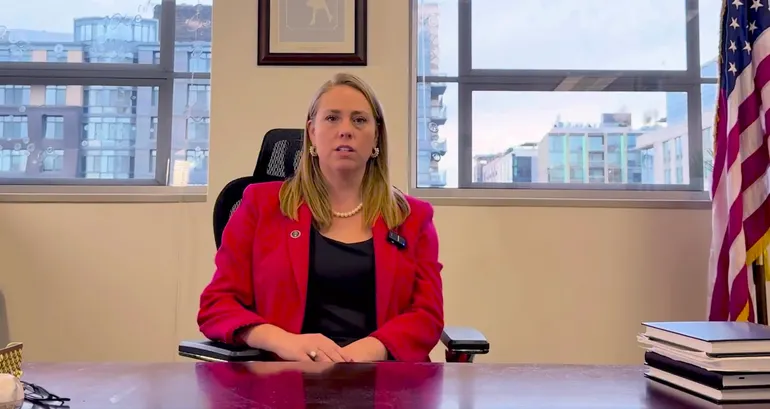
“Chair Lucas has definitely been leveraging their public wing, their press releases, public statements … utilizing social media, putting videos on LinkedIn,” Nasiri said. “She’s clearly trying to put the message out there, express their priorities, and that’s a way for them to get cases that align with those litigation priorities, too.”
In FY 2025 and 2026, the agency has also taken to announcing pre-litigation conciliation agreements, which are “confidential by statute,” Scroggins noted. By implication, EEOC may be negotiating certain elements of the agreement to obtain the employer’s consent to announce the agreement publicly.
EEOC can use such press releases to signal to employers that EEOC is prioritizing certain charges, “but it can also be a way to broadcast to employees that this is something that they can see from their own employer,” he said.
Announcing subpoena enforcement actions has also become a part of the agency’s strategy in the past year. In the past, while EEOC would sometimes put out a press release if it got a subpoena action enforced, “I had to go back more than 10 years to find another press release where they announced filing enforcement action,” Scroggins said.
Between social media messaging and announcements of these pre-litigation actions, EEOC may be relying more on the bully pulpit than its dwindling resources to obtain compliance — a trend that may continue into FY 2027.
“They’re really going out there and trying to make sure that people know that certain employers are being investigated,” Scroggins said.