
Dive Brief:
- The American Bar Association agreed to settle a lawsuit brought by the nonprofit American Alliance for Equal Rights alleging that an ABA legal scholarship fund discriminated on the basis of race and ethnicity in violation of the 1866 Civil Rights Act, the two organizations announced Monday.
- According to AAER’s April 2025 complaint, the fund unlawfully limited participation to members of underrepresented racial and ethnic minority groups and excluded White law students. This violated the Act’s protections guaranteeing equal rights of all persons to make and enforce contracts without respect to race, AAER claimed.
- In a press release, the ABA said that, in accordance with a resolution adopted last year by its board of governors, it expanded eligibility for all relevant programs “to all participants who share the ABA’s values, regardless of how participants identify themselves.” Edward Blum, president of AAER, said in a press release that the result of the case “speaks for itself.”
Dive Insight:
The pair of statements released by the ABA and AAER following publication of the joint stipulation of dismissal provided a glimpse into the ongoing societal dispute over institutional diversity, equity and inclusion programs.
From the ABA’s perspective, the agreement represented the organization’s “unwavering commitment to fostering an inclusive and trusted justice system,” it said. Michelle Behnke, the ABA’s president, said in the release that the organization remained committed to creating opportunities for all legal professionals to succeed.
“Diversity and excellence are not mutually exclusive,” Behnke said. “Indeed, diversity, equity and inclusion initiatives enhance merit within the legal profession.”
Conversely, Blum said in AAER’s statement that the ABA “fiercely resisted” its lawsuit, with AAER adding that the Bar Association had effectively dismantled its allegedly discriminatory eligibility policy before replacing it with a race-neutral framework.
“Organizations, corporations, and schools across the country are recognizing that dividing people by race — whether labeled as ‘diversity’ or otherwise — is inconsistent with our civil rights laws,” Blum said. “We expect this decision to encourage further reforms.”
AAER’s perspective has been echoed by President Donald Trump, whose administration has made opposition to DEI programs an operating principle of federal civil rights regulation. In a January 2025 executive order, Trump framed DEI programs’ aims as incompatible with concepts such as “merit, aptitude, hard work and determination” specifically in the context of hiring.
Democratic state officials, among others, have pushed back against this criticism. In one lawsuit against the administration, Democratic state attorneys general alleged that the order in question incorrectly conflated efforts to promote equal opportunity with unlawful preferences.
The ABA has faced other legal pushback against its DEI programs. For instance, a coalition of conservative groups filed a charge with the U.S. Equal Employment Opportunity Commission last year alleging that the ABA’s diversity clerkship programs violated Title VII of the 1964 Civil Rights Act by disqualifying law students based on protected characteristics.
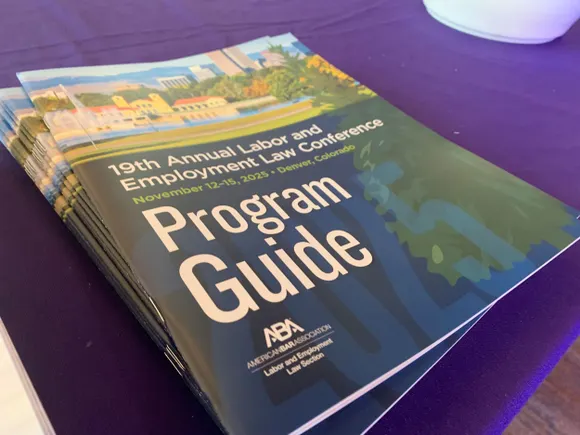
At one of the ABA’s own 2025 employment law events, attorneys cautioned attendees against the use of exclusionary criteria in order to select participants for mentorship, networking, training or similar employment opportunities. The attorneys said employers also may need to reconsider the framing of DEI programs and avoid the use of numerical goals and diverse candidate slate policies within such programs.