
Employers have contended with more than a years’ worth of concerns that federal immigration authorities will visit worksites as part of the Trump administration’s enforcement efforts. But one scenario they may fail to account for occurs when authorities decide to visit the home office of an employee who works remotely.
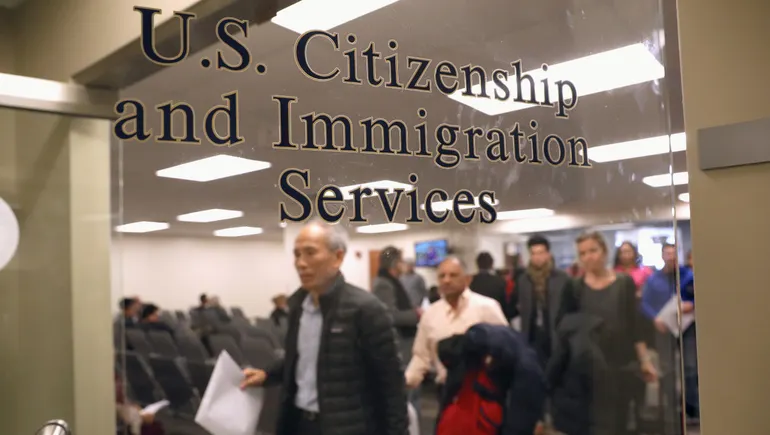
These operations are typically carried out by U.S. Citizenship and Immigration Services, specifically the agency’s Fraud Detection and National Security Directorate, which is charged with detecting fraud in immigration benefits requests, Kelli Duehning and Eileen Lohmann, partners at immigration-focused law firm BAL, said in an email to HR Dive.
FDNS visits focus on ensuring that employees working on H or L category employment visas are following the rules of their respective visa programs. The agency has the authority to conduct site visits to verify information submitted in an individual’s visa petition, and if the employee is in a remote or hybrid work arrangement, that means such visits can take place at an employee’s home.
“If an employer does not cooperate with a site visit, this can be grounds for the government to deny a petition or revoke the employee’s approval,” Lohmann said. “So it’s important to be prepared for these visits and to have a process for responding.”
Be aware of privacy concerns
The nature of a home office visit differs significantly from that of a traditional worksite visit, Chris Thomas, partner at Holland & Hart, said in an email. The fact that the former occurs in the context of a private residence can feel substantially more intrusive, creating concerns for privacy, family disruption and personal security.
“After all, individuals have read about and seen enough in the news to know that any visit by [U.S. Department of Homeland Security] personnel could be a life-altering experience,” Thomas said.
But it’s up to employers to not only inform employees of the possibility of a home office visit but also to ensure that they do not cause unnecessary alarm, Lohmann said. Employees should know that the government can visit the worksite listed on any visa petition as well as any client sites that the employee may visit during the course of their work.
It’s important to have protocols for each type of site visit, she added. Employees should be prepared to answer any questions that a USCIS representative has when the agency shows up at the door. And if it’s unclear who the representative is at first glance, the employee can ask to see the official’s badge and agency credentials through a window or security portal of their door before opening it.
Know what requests can be refused and which can’t
As a baseline matter, employees do not need to let USCIS representatives into their homes, Duehning said. USCIS personnel generally only will have administrative warrants on hand rather than judicial warrants, she added, and if an officer does not have a judicial warrant granting entry to the home, the employee does not have to provide entry.
However, that does not mean that employees are advised to turn away a USCIS officer full stop, Duehning said. Employees should be prepared to answer any questions regarding their role, salary, job duties, worksite location and other information related to their role based on their visa application.
USCIS regulations state that agency officers will request an individual’s permission to undertake a visit and interview, Lohmann noted, and individuals who are represented by legal counsel may request that their representative join by telephone or reschedule the visit at a time when the representative is available.
In the event that an employee voluntarily allows an officer to enter their home, the official may request to see the employee’s workspace to confirm the existence of a legitimate remote work set up and ensure the employee is actively working in the sponsored position, Felipe Jimenez, associate attorney at Reddy Neumann Brown, wrote in a May article for the firm. While officers can ask questions regarding ongoing work, employees should not disclose confidential information or violate employer policies about such information, Jimenez said.
Have designated contacts on hand
The employee should know whom to contact in the event of a home site visit, whether that is the employer, the employee’s manager or someone else, Lohmann said. Similarly, the employee also should be prepared to document what has taken place during a site visit, including any questions asked by the officer.
Similarly, employees should be trained to understand how to determine the difference between administrative site visits and law enforcement visits, the latter of which are conducted by agencies like Immigration and Customs Enforcement, said Duehning. Employers may need to create separate response plans specific to ICE visits given that agency’s tactics, which can include detention of workers.
“I have not heard of any instances where an employee was arrested from their home due to their work assignment,” Duehning said. “Most of the media and other instances where I have heard about arrests at an individual’s home [were] done by ICE without a warrant.”