
Dive Brief:
- A San Francisco transit operator’s grant of religious accommodation from a COVID-19 vaccination mandate might have increased safety risk, but this alone is not a sufficient basis on which to find that a proposed accommodation poses undue hardship, the 9th U.S. Circuit Court of Appeals said in a ruling Friday.
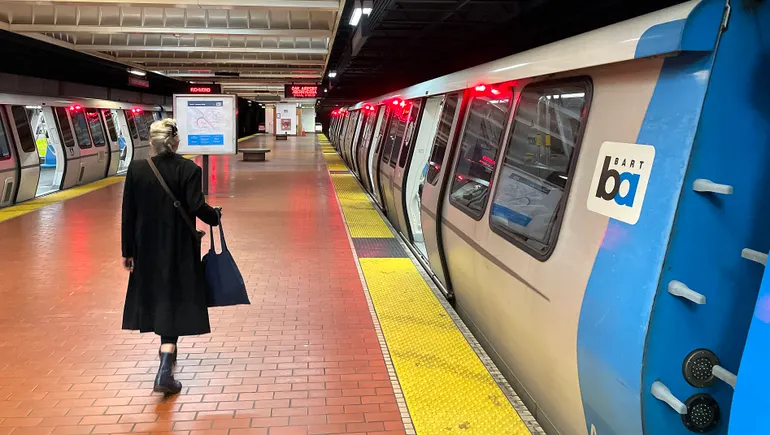
- Plaintiffs in Lewis-Williams v. San Francisco Bay Area Rapid Transit District requested exemption from BART’s vaccine mandate due to religious objections but were denied. BART argued that an accommodation to its mandate would only be reasonable if it provided the same level of safety as vaccination, while anything less would pose undue hardship. The court disagreed and upheld a federal jury’s verdict in favor of the plaintiffs.
- The decision provides insight into the 9th Circuit’s interpretation of undue hardship under Title VII of the 1964 Civil Rights Act, which is significant given the court’s extensive recent jurisprudence on religious objections to workplace COVID-19 vaccination mandates. The 9th Circuit has sided with employers in this area on multiple occasions through the last few years.
Dive Insight:
The legal analysis of workplace religious accommodations in the U.S. changed with the Supreme Court’s 2023 decision in Groff v. DeJoy. There, a unanimous court clarified that a proposed accommodation proposes undue hardship when it is substantial in the overall context of an employer’s business, a calculation that accounts for factors such as the employer’s size, its operating costs and the nature of its business.
Applying Groff, the 9th Circuit concluded that employers may not escape their accommodation obligations under Title VII merely by pointing out that a proposed accommodation has safety implications. “Common sense dictates that safety risks, like any other category of risk, are capable of justification,” the court said.
Furthermore, nothing about the nature of the plaintiffs’ work suggested that an in-person alternative to vaccination would be unreasonable. None of the plaintiffs held jobs that required them to be in close, frequent contact with the public or even most co-workers, the court noted, so alternatives such as masking and testing could have effectively mitigated disease transmission.
The 9th Circuit contrasted the facts in the case with that of its 2025 decision in a case involving a group of firefighters in Washington state who similarly requested a religious exemption from a COVID-19 vaccination mandate. There, the court held that the fire department in question had a duty to provide the public with emergency and life-saving services requiring constant interface with the public and co-workers. The department also faced serious financial and operational hardships had it accommodated the plaintiffs, the court said.
The court has been the venue of several other similar lawsuits, some of which have analyzed Title VII’s requirement that an employee’s beliefs, practices or observances be both religious in nature as well as sincerely held.
In one such decision, the 9th Circuit held that a plaintiff’s objection to a vaccine mandate was personal and secular rather than a bona fide religious belief. The court noted in a separate case, handed down in July, that an employee’s previous vaccinations did not necessarily bar her religious accommodation request with respect to a COVID-19 vaccine mandate.
At the federal level, regulators have pursued penalties for employers alleged to have improperly denied COVID-19 vaccination accommodation requests. In the past year alone, the U.S. Equal Employment Opportunity Commission inked two multi-million-dollar settlement agreements with such employees, one for $15 million and another for more than $4 million. The current agency has cited vaccine religious accommodation as one of many planks in its efforts to address anti-Chrisitian workplace bias specifically.