
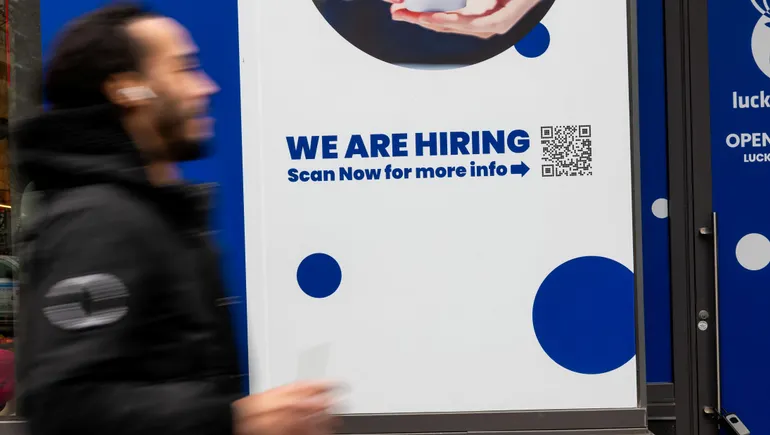
A slow hiring market — especially for entry-level roles often staffed by young people — may create a “missing rung” in the leadership pipeline that will throttle company growth in the future, according to an analysis by Guild’s Guy Berger, its workforce economist in residence.
Employers have made a risk calculation due to an uncertain economy that they can get away with hiring less entry-level talent for now since many of those tasks are automated or able to be performed by artificial intelligence, Berger said.
The risk “is in what happens if this hiring freeze hardens into an impermeable barrier for people at the bottom rung of the career ladder,” he wrote. “Do that for a few years and you won’t have anyone to promote into the middle a decade from now.”
This lack of hiring can create a donut hole effect, where a sector or company has a lot of younger and older workers but no one in the middle serving as middle managers and technical leads — problematic, since middle managers play a key role in creating a strong employee experience and company culture.
“It’s tempting to think you can fix a donut hole later by poaching. But almost everybody in your industry is doing the same thing,” Berger said. “If your plan is to hire experienced people from competitors five or ten years down the line, remember that they didn’t hire those people either.”
And now, entry-level jobs no longer look as they once did, emphasizing judgment calls over the basic, heavy-volume work that allows younger workers to learn as they go. But good judgment is developed over time, Berger noted, so how can an employer make up the difference?
In this current market, employers will need to build a purposeful pathway of learning to make up for the loss of entry-level skill building, various sources have said. Build clear career paths and lean into new hire cohorts to emphasize learning and bonding, other reports note.
But employers will need to be wary of putting too much on managers’ plates amid a crisis of burnout afflicting managers in particular, surveys have shown.