
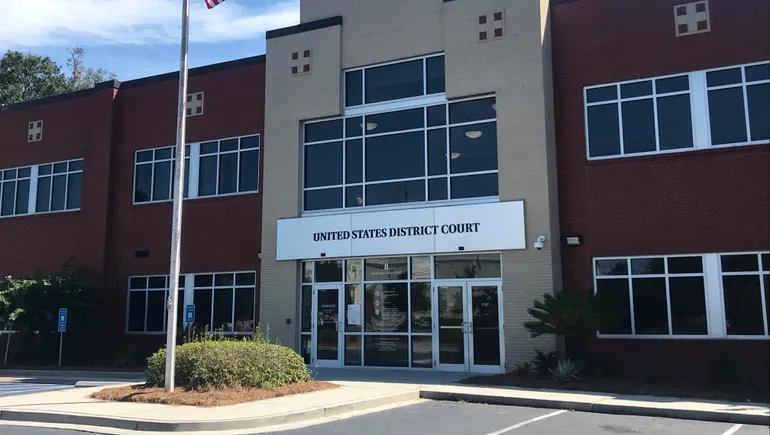
A federal district court should order Hyundai to explain why it cannot comply with the U.S. Equal Employment Opportunity Commission’s request for information in an ongoing investigation of alleged anti-American discrimination, the agency said in a lawsuit filed Thursday.
Per the filing in the U.S. District Court for the Southern District of Georgia, the investigation stemmed from a commissioner’s charge filed by former EEOC Chair Charlotte Burrows in 2024. It alleged that, since 2023, Hyundai’s ENG America division refused to hire or promote non-Korean workers for operations in Alabama and Georgia.
The alleged conduct violates Title VII of the 1964 Civil Rights Act, which prohibits employment discrimination on the basis of national origin.
EEOC said it served Hyundai a subpoena in February, to which the automaker responded with a petition to revoke or modify the subpoena. EEOC partially denied the petition the following May and gave Hyundai another compliance deadline set in June. According to court documents, the requested data covered all current and former employees of Hyundai’s Alabama and Georgia locations from Jan. 1, 2020, onwards.
The commission classified Hyundai’s June response to the request as “deficient,” alleging that the company only submitted data covering a period from January 2023 to present. EEOC also claimed that Hyundai did not provide any data for certain requested categories, including hire date, termination reason, nationality and certain pay information.
A spokesperson listed for Hyundai did not immediately respond to a request for comment.
Per EEOC, Hyundai told the agency that it could not obtain certain information, such as employee nationality, from its BambooHR system. However, the agency contended that Hyundai could obtain such data via other means, such as its responses to mandatory employment forms filed with the Department of Homeland Security.
The company’s operations in the South have been scrutinized by multiple federal agencies in recent years. That includes a 2024 lawsuit filed by the U.S. Department of Labor alleging that Hyundai and an Alabama supplier illegally jointly employed a 13-year-old to make auto parts. Litigation in the case is ongoing.
Hyundai also became the subject of a high-profile immigration enforcement operation last year, when federal agents detained nearly 500 people at a Georgia manufacturing facility. The operation constituted one of the largest single-site immigration enforcement efforts in U.S. history, according to the Associated Press.
EEOC, meanwhile, continues to pursue court enforcement of investigative subpoenas tied to commissioners’ charges. While similar recent efforts have mostly focused on charges related to employers’ diversity, equity and inclusion programs, EEOC’s filing against Hyundai shows the agency is willing to utilize the strategy in pursuit of other enforcement objectives.
Under Chair Andrea Lucas, the commission also has made national origin discrimination a prominent part of its regulatory agenda. This is particularly the case with respect to anti-American bias; Lucas posted a public video to social media websites earlier this month calling on workers to submit anti-American discrimination charges.