
Dive Brief:
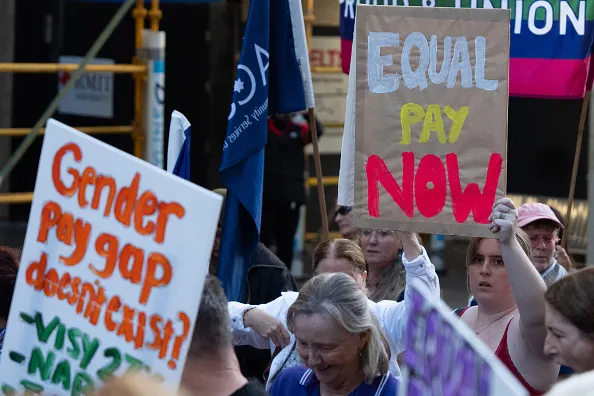
- The uncontrolled gender pay gap grew slightly in 2026, with women now earning $0.82 per dollar earned by men, down from $0.83 last year, according to a Tuesday report by compensation vendor Payscale.
- Over a 40-year career, that translates to $1 million in lost earnings, Payscale said, or $14,300 less per year in median pay.
- “Pay transparency is both a workforce engagement and compliance imperative,” Ruth Thomas, chief compensation strategist at Payscale, said in a statement. “When pay gaps persist or widen, women are more likely to disengage, change jobs, or leave roles altogether, shrinking the available talent pool and increasing turnover costs for employers.”
Dive Insight:
Payscale found that the gender pay gap exists at every education level and “widens significantly” as women age and progress in their careers.
Women aged 45 and older earn $0.71 per dollar men earn, and women executives earn $0.69, which “may reflect the cumulative effects of slower career progression, caregiving penalties, and less consistent access to leadership roles,” Payscale said.
Earlier this month, Glassdoor shared data indicating that women’s earnings stop growing in their late 30s, while men’s wages continue to increase throughout their 40s. That’s reflected in the fact that the gender pay gap grows over time, climbing from a 12% difference at the start of a career to 19% after a decade and to 25% after 30 years.
Part of the issue is how raises are awarded, according to recent research from Hayden Gunnell, assistant professor of accounting at the McCombs School of Business at the University of Texas at Austin. Pay raises are generally distributed as percentages of existing salaries, which “perpetuates pay gaps” if the salaries were already unequal, the research showed.
There has been some improvement in closing the pay gap in states with pay transparency laws, however, Payscale reported. In 2026, nine of the states with such laws had effectively closed the controlled gender pay gap, including California, Washington, D.C., and New York. But six other states with pay transparency laws did not close the gap, “suggesting that disclosure requirements may not be enough without consistent, data‑driven compensation practices.”
To further complicate the picture, the states that have made progress on the gender pay gap change from one year to another, “suggesting that pay transparency laws are working but that there is more work to be done,” Payscale said.
“Transparency works when it’s treated as a business process, not a checkbox,” Lulu Seikaly, senior employment counsel at Payscale, said in a statement. “For example, extremely wide pay ranges may comply with the letter of the law but not the spirit and are not viewed favorably by job candidates. With expanding state laws and new global requirements like the EU Pay Transparency Directive, employers should actively monitor, document, justify, and communicate pay decisions — or risk falling out of compliance.”