
The U.S. Equal Employment Opportunity Commission voted 2-1 Thursday to rescind its Biden-era workplace harassment guidance. The document had faced nearly two years of legal and political scrutiny challenging its provisions protecting transgender employees and employees who seek an abortion.
EEOC adopted the harassment guidance in April 2024, incorporating changes it said were shaped by developments like the U.S. Supreme Court’s 2020 decision in Bostock v. Clayton County, Ga. In that case, the high court held that Title VII of the 1964 Civil Rights Act prohibits workplace discrimination based on gender identity and sexual orientation.
Among other things, the guidance took the position that illegal harassment could include: “outing” an employee; repeated and intentional use of a name or pronoun inconsistent with an individual’s known gender identity; and the denial of access to a bathroom or other sex-segregated facility consistent with the individual’s gender identity.
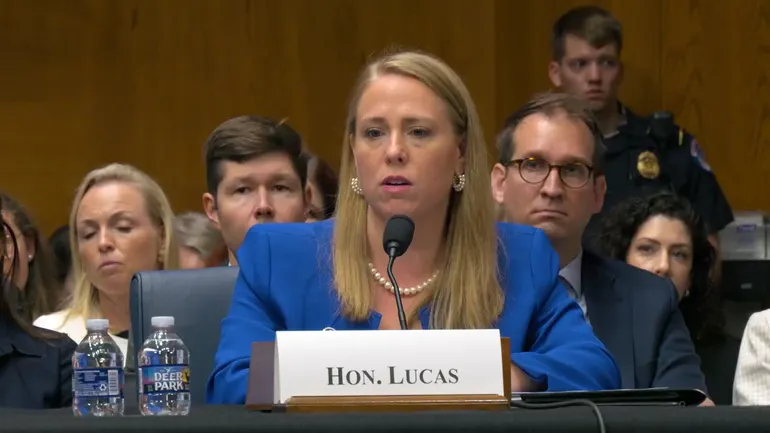
“We need to understand our place,” Chair Andrea Lucas asserted at the Thursday morning meeting. “We cannot make affirmative statements of policy interpreting Title VII. We can only make procedural rules that allow us to implement what Congress has set out.”
Commissioner Kalpana Kotagal, the commission’s lone Democrat, pushed back against the decision in her remarks, arguing the agency was “throwing the baby out with the bathwater” by rescinding the entire guidance. It had spent 10 years creating the document and owed the public a comment process before rescinding it, she said.
“Setting aside my robust disagreements with the ruling and reasoning, I remind my colleagues by court logic, it is a substantive rule … substantive rules must be rescinded through comment procedures,” Kotagal said. She pointed to EEOC’s own assertion in a February court filing that stated as much, a contradiction also raised by EEO Leaders in their criticism of the agency’s rescission plan.
Both the provisions on transgender employees and another addressing harassment pertaining to pregnancy, childbirth and related medical conditions — including the choice to have or not to have an abortion — were successfully challenged in court.
A North Dakota federal judge blocked enforcement of the guidance with respect to a Catholic diocese and the Catholic Benefits Association. And last May, a Texas judge vacated the portions of the guidance that focused on gender-identity discrimination.
Lucas and fellow Republican Commissioner Brittany Panuccio leaned heavily on these and other court decisions over the past few years in arguing the guidance should be rescinded.
Lucas, who voted against approving the guidance at the time, had long pledged to rescind it once the agency’s quorum was restored. Lucas and Panuccio voted to do so; Kotagal voted against.
Panuccio said she is still “deeply invested” in preventing and remedying harassment in the workplace, pushing back against the notion that rescinding the guidance would signal a backing away from enforcement of anti-harassment law.
Legal observers also have cautioned employers against removing sexual orientation and gender identity from their workplace harassment policies regardless of EEOC’s decision.
“While the rescission is effective immediately, as a legal matter, the repeal of non-binding EEOC guidance does not dramatically alter federal anti-harassment law,” James A. Paretti, a shareholder at Littler said in an analysis, “nor does it bear on state civil rights laws that prohibit workplace harassment.”