
Dive Brief:
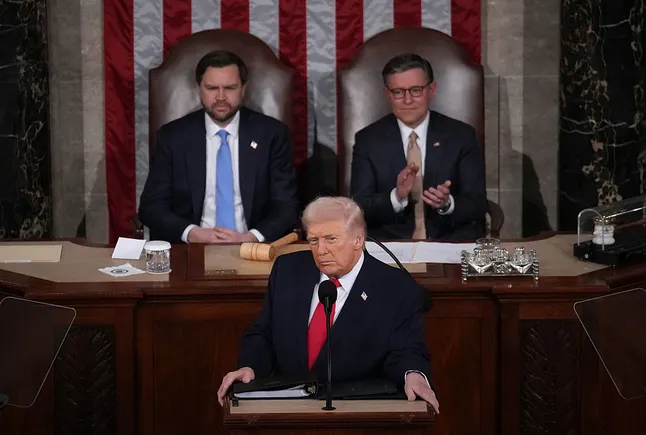
- Private-sector workers who do not have employer-sponsored retirement plans could be able to enroll in a new plan modeled after one offered to federal workers starting next year, President Donald Trump announced Tuesday during the State of the Union address.
- Under the plan, workers could receive up to $1,000 annually in matching contributions from the federal government, Trump said. The offering is intended to remedy a “gross disparity” — that half of working Americans don’t have access to a retirement plan with an employer match, the president said.
- “Next year my administration will give these oft-forgotten American workers, great people, the people that built our country, access to the same type of retirement plan offered to every federal worker,” Trump said.
Dive Insight:
More than 44% (40.6 million) full-time U.S. workers don’t participate in a retirement plan, and nearly 51% (48.8 million) don’t have an employer match, a White House official told HR Dive.
If workers aren’t saving for retirement through their employer, they’re likely not saving at all, a Feb. 5 report issued by the National Institute on Retirement Security found. Of workers with a positive defined contribution plan balance, 80% had a DC plan through their main employer, NIRS said.
Nearly half of employees think they will need at least $1 million to retire, but a little more than a quarter expect to reach that goal, according to a December report by Betterment at Work, a provider of 401(k) plans.
Trump’s new plan would be similar to the Thrift Savings Plan offered to federal workers and would give employees access to a government match and diversified, index-based investment and portfolio options, the White House official said.
The plan builds on the Saver’s Match program created under the Secure 2.0 Act passed in 2022, per the official, which is set to launch in 2027. Private philanthropists also will be able to contribute to these plans, and the administration is working to make the accounts portable.
The official said the plan can mostly be implemented through existing administrative authority but that additional legislation could add further support. The White House is expected to share more details about the plan soon.