
David Urban is senior counsel at Liebert Cassidy Whitmore, where he represents public agencies and public and private educational institutions in labor and employment law, with a focus on First Amendment, Title IX and constitutional issues.
Free speech serves as a core principle of the U.S. democracy. The Constitution’s First Amendment protects expression on all types of subjects and topics, but courts are particularly careful to protect individuals’ political expression. In its absence, it would be difficult for democracy to function.
David Urban
Permission granted by David Urban
Lofty concepts, but a complicating factor is that the First Amendment binds only government actors — not private companies. And private companies write the paychecks for the vast majority of U.S. workers. What happens when a private employer attempts to censor an employee’s political speech through threats of discipline or termination, or by other means? The U.S. Constitution provides employees with no protection in this situation.
Responsible employers may well recognize that such intimidation is not going to advance the company’s business purpose, and that sound business and civic reasons exist not to interfere in employees’ political lives. But what about those that take a different approach? What legal guardrails exist that protect against abuses?
The same legal questions need to be answered looking at the situation — as human resources professionals often must – from the opposite perspective. Sometimes, employees’ political activity will, in fact, create workplace disruption. How are human resources departments supposed to respond when an employee’s political expression and activities interfere with the company’s legitimate operations?
Examples include when an employee’s political rants on social media deeply offend workplace colleagues; when an employee engages in a protest that has such a divisive sting to segments of the population that customers consider taking accounts elsewhere; or when political talk and debate in the office consume valuable headspace for teams. In these situations, does management have a free hand in problem solving through employment actions?
Legal Standards
Before adopting workplace policies and procedures for handling such potential issues, HR professionals need to understand the relevant legal landscape.
Political activity is not a protected class — usually
To start, private employers do, for the most part, have a free hand. Most private-sector workers are “at will,” and an employer can terminate them for any reason or no reason. Some workers have individual employment agreements or have union representation and a collective bargaining agreement that limits the reasons for discipline. Under those circumstances, an employer must satisfy requisite standards for taking employment action, and the political activities may satisfy them if the actions take the form of egregious conduct and sufficiently affect the employer.
But political beliefs and activities are typically not protected characteristics in the same way as race, sex, religion, national origin, age, disability or other factors. This means private employers may, in many situations, regulate political expression at work or take action based on political conduct. However, several important caveats apply.
Political activities that implicate anti-discrimination statutes
First, political issues can implicate legally protected categories under some sets of facts. This is particularly true of an individual engaging in political activity squarely in support of their own protected classification – for example, an individual explicitly and vocally endorsing a political candidate because that candidate supports the interests of the individual’s gender, race, religion, sexual orientation, national origin or other protected classification.
A private employer’s targeting the individual based on this political activity could give rise to concerns of discrimination or retaliation based on protected status. The same holds for participating in a protest or other political activity in support of the same cause. In addition, state laws often, and Title VII of the Civil Rights Act does, protect against employer retaliation against an employee based on opposition to unlawful discrimination against a co-worker, even when the first employee does not in fact share the classification at hand. Thus, employers must evaluate the nature of any political activity in deciding whether anti-discrimination laws apply.
Statutory protections for political activity
Some states and localities provide protections for lawful off-duty political activity, political affiliation or participation in civic processes. California, New York, Colorado, Minnesota, Louisiana and other states impose limits on adverse employment actions based on certain different types of political conduct. For example, California bars employers from making or enforcing rules that forbid political participation or that control or direct employees’ political activities or affiliations. It also prohibits employers from coercing or influencing employees — through threats of discharge or loss of employment — to adopt or refrain from a particular “course or line of political action or political activity.” HR officials should always confirm applicable state and local requirements before acting.
Privacy protections for off-duty conduct
Several states have statutes limiting the ability of employers to discipline for off-duty conduct that has no nexus to the workplace. Colorado, New York and North Dakota have such laws. (California’s labor code mentions off-duty conduct but has been construed not to create an independent cause of action.)
These laws can potentially be interpreted to prevent employers from firing or disciplining employees for expressing their personal views unless those views have a clear, material impact on the business.
‘Concerted Activities’ under the National Labor Relations Act
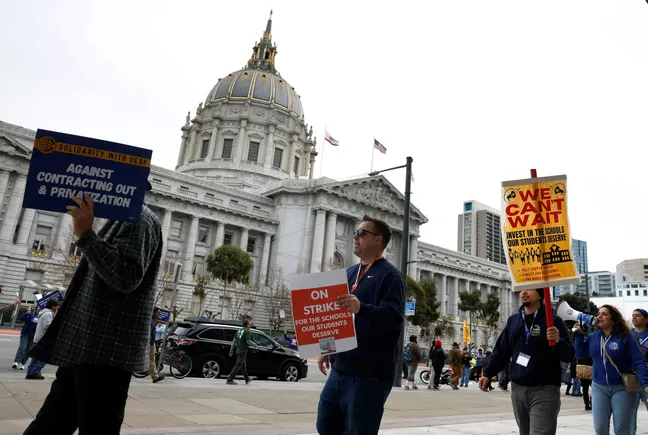
The National Labor Relations Act, the New Deal-era law governing labor-management relations, protects employees’ rights to engage in “concerted activity” regarding terms and conditions of employment.
Political speech that touches on wages, benefits, scheduling, workplace safety or employer policies may be protected — even if it has a political dimension. For example, employee advocacy around minimum wage laws or workplace safety regulations may qualify as protected activity (even if it is sharp, critical or posted online). The key is that it is not merely an individual rant; it must be tied to group action or group concerns about working conditions. Disciplining employees in these circumstances can trigger unfair labor practice claims.
Further, the National Labor Relations Board, the agency that administers and enforces the NLRA, has explained that employees have the right to communicate about wages with co-workers and even with the media and the public.
Best practices
To strike the right balance between employee and employer needs, HR professionals can implement several best practices.
Apply policies consistently and neutrally. Consistency is one of HR’s strongest legal defenses. If political slogans on clothing are prohibited, the rule should apply across ideologies. If personal social media use is regulated, enforcement should not hinge on whether leadership agrees with the message.
Focus on behavior, not beliefs. When intervention is necessary, frame decisions around conduct and impact, not ideology. Harassment, threats, disruption or misuse of company resources are legitimate concerns regardless of the political content involved. Documentation should clearly reflect these business-related reasons rather than subjective disagreement with an employee’s views.
Avoid management itself expressing political messaging. It is prudent in a jurisdiction with statutory protections for employee political activity (like California and New York) to avoid management taking any position on partisan politics and certainly to avoid written statements on these issues, since all of these could be argued to be coercive.
Train managers before issues arise. Political disputes in the workplace can escalate because front-line managers react emotionally or inconsistently. HR should provide guidance on how to de-escalate conversations, redirect discussions to work-related topics, and promptly involve HR when concerns arise.