
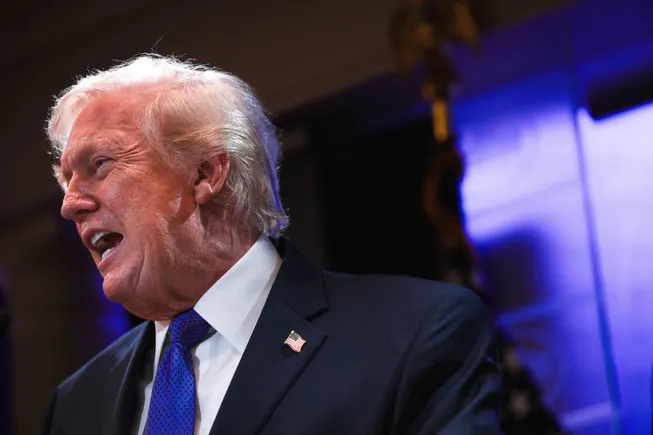
The Trump administration’s policy pivots on diversity, equity and inclusion and immigration proved impactful to a larger share of employers in 2025 compared to other areas, including artificial intelligence, according to Littler Mendelson survey results published March 5.
Littler, which polled just over 300 employer representatives in late January and early February, found that the share of employers citing policy and regulatory effects from either DEI or immigration more than doubled that of any other category measured.
The firm’s findings reflect a flurry of activity by federal agencies — especially the U.S. Equal Employment Opportunity Commission — targeting DEI programs since President Donald Trump’s second inauguration.
In one of EEOC’s first major actions following the restoration of its quorum, which also cemented a Republican majority at the commission, the agency rescinded its Biden-era workplace harassment guidance. The document took positions on Title VII of the 1964 Civil Rights Act with which Chair Andrea Lucas disagreed concerning protections for transgender workers and employees who seek an abortion.
Jim Paretti, shareholder at Littler, said during a March 4 media event that while the rescission didn’t surprise employers, it did result in less clarity regarding how EEOC views Title VII.
“I do think that’s unfortunate, only insofar as much of what was in that guidance, I think, was not particularly controversial or novel,” Paretti said. “It served as a good benchmark for employers to know how the agency views certain things.”
Employers should expect Lucas to act swiftly and transparently on several stated priorities, he continued. For example, the chair has expressed interest in combating religious discrimination, an area that Paretti said has become “more fertile” for lawsuits by employees who seek religious accommodations or who seek to raise other religious issues.
On immigration, 65% of employer respondents said they had been affected by the Trump administration. That is reflective of a broader talent crunch employers face due to the White House’s enforcement efforts, said Jorge Lopez, also a shareholder at Littler.
The list of changes includes updated asylum application requirements, termination of temporary protected status for nationals of several countries and a proposed increase to the prevailing wage standards set by the U.S. Department of Labor for certain foreign workers programs.
Each of those policy shifts comes amid increased scrutiny of H-1B visa and Permanent Labor Certification applications via DOL’s Project Firewall, Lopez added. He said employers, particularly those in fields like construction, hospitality, agriculture and landscaping, struggle to replace the skill sets of immigrant workers whose legal status has been revoked or whose attempts to lawfully immigrate have been affected by policy decisions.
“There’s not a retinue of individuals that [employers] have available to take on these jobs,” Lopez said. “In hospitality, I’ve dealt with a number of restaurant groups that basically have shut down operations because they just can’t continue to move forward with what they have.”
Littler found that the combined effect of regulatory and economic uncertainty prompted more than one-third of respondents to reduce headcount within the past year, while an additional 30% either paused or reduced hiring.
That uncertainty also played out at the state and local level, with 9 in 10 respondents to Littler stating that state and local legislative changes and workplace regulations affected them over the previous 12 months.
Paretti said an example of the conflict between federal and state-level policies concerns protections for transgender employees. State laws may include explicit protections for employees on the basis of gender identity, whereas the Trump administration has ridiculed the concept of gender identity altogether. Employers, caught between these perspectives, find themselves in a “thorny” situation, Paretti said.
He pointed to the U.S. Supreme Court’s decision in Bostock v. Clayton County, Ga. as one guiding point, given the court’s decision in the case holding that gender identity is a protected category under Title VII. Employers must keep this in mind as they develop real-world, practical methods for dealing with subsequent issues, such as bathroom use, Paretti said.
“Everything is on the table, and you just have to approach it with an open mind in the realm of what is doable and what is predictable,” he added.