
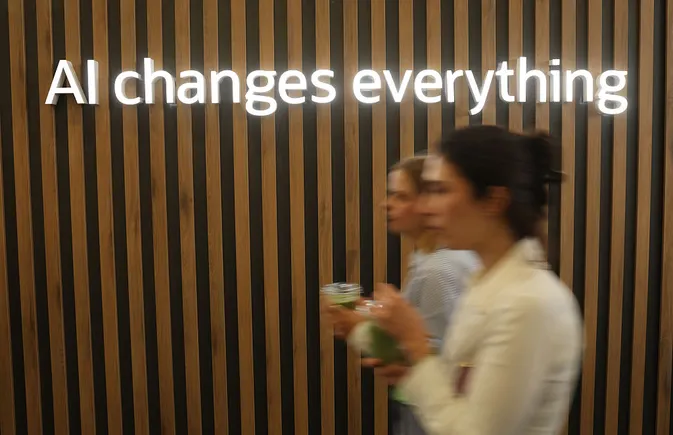
Business leaders need to exercise caution regarding AI at work, particularly because creativity and critical thinking are at risk, a University of Bath report warned.
AI can support workflow or assist with compliance, Professor Dirk Lindebaum, author of “On the Dangers of Large-Language Model Mediated Learning for Human Capital” noted in an April statement.
However, Lindebaum said, if workers “no longer engage directly with important processes, familiarity and expertise will fade,” Lindebaum said.
How different kinds of knowledge interact with AI
Researchers did identify two kinds of human knowledge they found to be more compatible with AI: “encoded knowledge,” which refers to rules, procedures and datasets, and “embedded knowledge,” which refers to digitized processes and routines.
On the flipside, three forms of knowledge that are incompatible with AI are:
- “embodied knowledge,” which is gained through hands-on experience
- “encultured knowledge,” which is developed through organizational culture
- “embrained knowledge,” which is analytical judgment and problem-solving
This kind of knowledge is gained through “real-world experience, sensory engagement, socialisation and repeated practice,” Lindebaum said, noting that they cannot be developed “through exposure to AI-generated text or synthetic training environments.”
A pattern of strained productivity, due to AI
Experts have long warned HR pros about the negative effects of AI on the workplace, as well as employees themselves. Many workers say they don’t know how to use AI — “despite all the money spent on pilots, deployments, and licenses,” an April report from Forrester suggested.
For example, about 26% of people told Forrester that they didn’t know what prompt engineering is, up 4 percentage points from the year prior. Forrester’s vice president and principal analyst, J.P. Gownder, called the overall results from the study “alarming” in a statement about the research — especially because prompt engineering is crucial to using AI tools like Microsoft 365’s Copilot and Google Workspace, Gownder said.
Meanwhile, employees are not just feeling the tension between their lack of skills and the demand to use AI, but they’re also feeling the imperative to do more with less.
Despite the majority of C-suite leaders telling Culture Amp that they expected AI to increase worker output, 77% of employees told the employee experience platform that AI tools only increased their workload in a report released last month.
Looking ahead: What happens next with AI at work?
The phenomenon of AI making work harder, not easier, has not gone unnoticed by HR professionals.
The CHRO Association and the University of South Carolina put out a joint report where 91% of surveyed CHROs said AI and workplace digitization was their main point of concern — above general organizational transformation or leadership development. “CHROs are being asked to strengthen organizational resilience while modernizing how work gets done,” CHRO Association CEO Tim Bartl said in a statement last month.
Ultimately, as the several reports indicate and Bath’s Lindebaum said, AI at work can be useful, but “this should not be taken at face value.”