
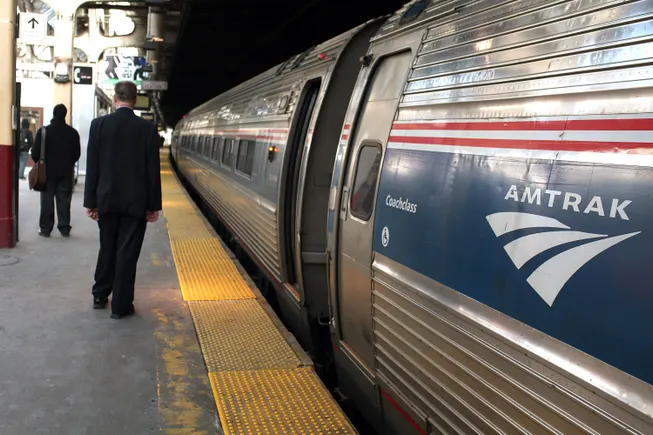
A former Amtrak employee failed to show that the rail operator fired him because he took intermittent leave under the Family and Medical Leave Act and because of his age and disability, rather than his failure to follow Amtrak’s attendance guidelines, a Pennsylvania federal judge held Wednesday.
The plaintiff in Bisher v. National Railroad Passenger Corporation sought, and was approved for, intermittent leave over a period of five years between 2015 and 2020 for anxiety. Per the judge, each of these requests followed a set process in which the plaintiff contacted Amtrak to request FMLA paperwork, brought the paperwork to his physician and returned it to Amtrak.
Beginning in 2019, however, the plaintiff began to receive warnings and a three-day suspension for attendance policy violations. Despite receiving an email from his supervisor reminding him about the company’s FMLA process, the plaintiff received further warnings ahead of his FMLA certification’s expiration in 2020.
After his certification expired, the plaintiff arrived late nine times without citing FMLA leave or his medical condition. Amtrak placed him at a termination level within its progressive discipline system, after which the plaintiff accrued three more absences before Amtrak moved to terminate him.
The plaintiff claimed that his termination constituted discrimination on the basis of disability and age as well as FMLA retaliation and interference. The judge granted summary judgment for Amtrak on all claims.
As part of his case against Amtrak, the plaintiff claimed the employer “relaxed” its attendance policy amid the COVID-19 pandemic, during which many of his reported violations took place. The plaintiff’s supervisor conceded this in testimony, stating that Amtrak did relax its policies at the plaintiff’s location during the first nine months of 2020.
However, the supervisor also explained that this relaxed policy applied to those who were sick or felt symptoms related to COVID-19 and that Amtrak advised such employees to see a doctor, avoid reporting for work and follow up with its medical department. Because the plaintiff did not report such symptoms — and because Amtrak had previously granted all of his FMLA requests when its processes were followed — the court found the relaxed policy wasn’t relevant to his case.
The case represents some of the complexities employers faced at the intersection of the FMLA and COVID-19, particularly during the pandemic’s early days. The sudden closure of worksites and implementation of health and safety protocols tested employers’ policies, in addition to the challenges imposed by the federal government’s efforts to introduce emergency paid FMLA leave that would cover certain affected employees.
But the facts presented also show the importance of thorough documentation in intermittent FMLA compliance. The judge repeatedly referenced Amtrak’s disciplinary record as well as an email between the plaintiff and a supervisor, in which the latter warned the former to follow FMLA procedures, going so far as to tell the plaintiff to “please continue to cover yourself to avoid being dinged.”
The court also included testimony from the supervisor who ultimately recommended the plaintiff’s termination, noting that this supervisor “explained that while he lamented this outcome, he based his decision on [the plaintiff’s] disciplinary record and failure to change his behavior despite being given multiple chances to do so.”
The court similarly rejected the plaintiff’s age and disability bias claims. It held that he failed to show that he had either been replaced by a younger employee or that other, younger employees were not subject to similar discipline. Additionally, Amtrak supervisors testified that they did not know that the plaintiff had anxiety or another disability.