
Dive Brief:
- Hiring for skilled trades has increased to keep up with the rate of artificial intelligence infrastructure growth, a Wednesday report from Randstad indicates. Since late 2022 when generative AI entered the mainstream, demand for robotics technicians has spiked 107%, with demand for HVAC engineers up 67% and construction roles up 30%.
- “The debate around AI’s impact on jobs often speculates on job displacement, but a critical reality is being overlooked,” Randstad researchers said. AI is “spurring soaring demand” for skilled trade talent, who are needed to implement AI at work and sustain it.
- Randstad researchers suggest that time-to-hire is now longer for skilled trade workers than for knowledge workers in what they described as a “labor flip”: Compare 56 days to hire versus 54 days to hire.
Dive Insight:
Much has been made of AI potentially eliminating human workers, either in theory or in practice. Some U.S. business leaders have even told researchers that changes to workers’ compensation have been made in the name of gaining capital for AI investments.
The conversation has evolved to the point of action: States like New York and Minnesota are now seeing local lawmakers propose bills to safeguard workers against layoffs due to AI, either through new legislation or amendments to the WARN Act. (Sens. Josh Hawley, R-Mo., and Mark Warner, D-Va. even teamed up back in November to sponsor a bipartisan bill to this effect at the federal level, which would require employers to report AI-related layoffs.)
A standout element of Minnesota’s bill, which was proposed last week, was that it required a 90-day notice period before deploying AI that could potentially replace workers.
Despite some research, such as an April 2025 report from Orgvue suggesting that a growing number of business leaders who have laid off workers due to AI have regretted their decision, many employers continue to do so — potentially to their detriment.
The British Standards Institution reported in October 2025 that many employers jump to investing in AI, especially automation, instead of upskilling the existing workforce. However, BSI suggested that business leaders at small-and medium-sized companies could be key to upskilling efforts. Not only did fewer small- and medium-sized businesses reduce headcount due to AI compared to bigger firms, but fewer smaller firms characterized AI as crucial to their growth.
What’s notable about Randstad’s report is that the findings suggest that AI-driven expansion is reshaping what it means to be a skilled trade worker.
“These roles are increasingly highly specialized, digital-first positions. From electricians to robot technicians, digital fluency is now a prerequisite,” the report found. “The skilled trades are moving closer to traditional knowledge work, requiring a global re-rating of these career tracks and a shift toward continuous education and training opportunities.”
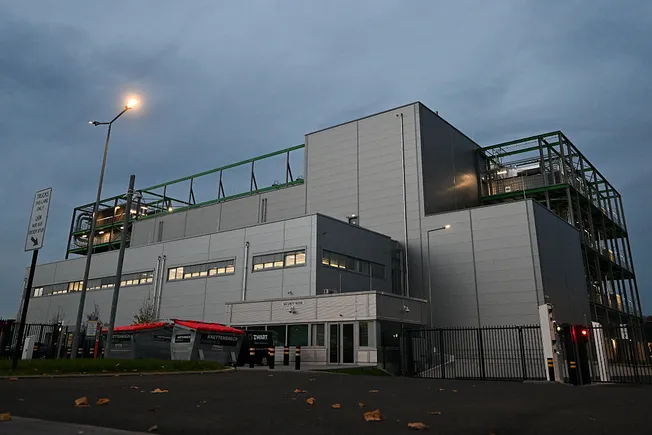
Randstad cites the infrastructure demands of data centers as the reason that skilled trades have faced more vacancies since late 2022.
“The digital revolution underway has a physical foundation,” Randstad CEO Sander van ‘t Noordende said in a statement. “While headlines focus on AI and the future of white-collar work, the real constraint on global growth is the scarcity of specialized talent in the skilled trades. This means the people who build the data centres, upgrade the power grids and maintain the infrastructure that makes AI possible.”
Randstad saw demand increase for industrial automation technicians as well as HVAC engineers, who are needed to install and maintain cooling systems for data centers. This uptick in demand for skilled trade workers is creating a hiring bottleneck and limiting potential growth, Randstad found.