
Dive Brief:
- Kaiser Foundation Health Plan Inc., part of Kaiser Permanente, agreed to reimburse eligible members more than $28 million to settle allegations by the U.S. Department of Labor that the company failed to provide “timely and appropriate access to mental health and substance use disorder services,” DOL said in a news release Tuesday.
- DOL alleged that Kaiser didn’t offer adequate provider networks for mental health and substance use disorder care and used patient questionnaires to prevent members from receiving care, forcing them to find care outside of Kaiser’s network, often at higher out-of-pocket costs, per the release.
- The settlement covers eligible Kaiser Permanente members in California who had to pay for out-of-network mental health or substance use disorder care between January 2021 and September 2024 and “does not involve current practices or issues,” Kaiser said in an emailed statement to HR Dive.
Dive Insight:
At issue are alleged violations of federal mental health parity laws, Kaiser said.
The Mental Health Parity and Addiction Equity Act requires health plans to cover mental health and substance use disorders in a comparable way to medical and surgical benefits, per DOL. The act requires that financial requirements such as copays and deductibles as well as yearly visit limits, prior authorization requirements and proof of medical necessity are similar.
Kaiser partially attributed its challenges to the spike in demand for mental healthcare in the past six years since the onset of the COVID-19 pandemic that led to a nationwide “shortage of qualified mental health professionals, clinician burnout and turnover.”
“These challenges made it very difficult for our members to get consistent access to the care they needed when they needed it. We are committed to reimbursing those members who tried but may have been unable to get timely care from Kaiser Permanente in that time,” Kaiser said.
Kaiser said that while “there is still work to be done,” the investments it has made in the past several years “have resulted in significant improvements in access” for members.
In addition to reimbursing affected members, Kaiser also will pay nearly $3 million to the federal government and will reform company policies to improve access to care, including reducing appointment wait times, improving care review processes and monitoring network adequacy, DOL said.
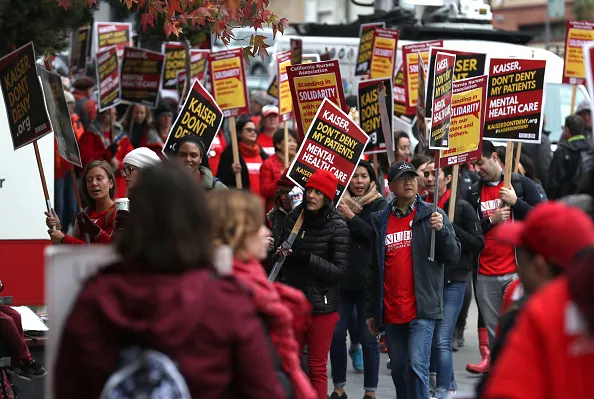
Kaiser has been subject to a series of strikes in the past several years, involving thousands of workers and allegations of insufficient staffing levels to meet patient care needs, among other concerns.
In May 2025, after more than six months on the picket line, about 2,400 mental health workers in Southern California secured a deal with Kaiser for a new contract that addressed employees’ concerns about inadequate pay and time to prepare for patient appointments.
Another roughly 2,000 mental health workers in Northern California went on strike for 10 weeks in 2022 before reaching a deal with Kaiser to improve clinicians’ workloads and reduce patient wait times.
A 2023 strike, meanwhile, involved more than 75,000 Kaiser workers across the country who raised concerns about wages and staffing levels that they said were insufficient to meet patients’ needs. And, in October 2025, 31,000 Kaiser workers in California and Hawaii launched a strike over pay and inadequate staffing levels.
Most recently, a strike by more than 31,000 — and growing — Kaiser employees in California and Hawaii over alleged unsafe staffing levels just entered its third week.